 daylikDownload on the App Store

Many chores for 8 year olds can be useful family contributions: caring for their own belongings, helping with meals, tidying shared spaces, and looking after a pet with an adult’s rules in place. The American Academy of Pediatrics includes tasks such as vacuuming, helping make dinner, making snacks, walking a pet, and putting away laundry among chores for children in this age range. Source (accessed 2026-10-16)
Age is a starting point, not a readiness test. Choose chores that match your child’s motor skills, attention, confidence, sensory needs, language needs, and your home setup. A child may do one task independently while needing a reminder, visual cue, adapted tool, or adult nearby for another.
An easy-to-copy chore checklist
Start with a small set rather than assigning every item at once. The labels below mean: Independent for a task your child can usually finish after learning it; Check-in for a task an adult reviews at the end; and Together for a task that needs active adult help or oversight.
Personal care and bedroom
- Daily — Independent: Make the bed or straighten bedding.
- Daily — Independent: Put dirty clothes in the hamper.
- Daily — Check-in: Put clean clothes away in drawers, bins, or on hooks.
- Daily — Independent: Return books, craft supplies, and toys to their homes.
- Weekly — Check-in: Clear floor space and sort outgrown, broken, or unwanted items with an adult.
Laundry, tidying, and organization
- Weekly — Together: Sort laundry by the system your household uses.
- Weekly — Independent: Match socks and fold simple items such as washcloths.
- Daily — Independent: Put backpack, shoes, coat, and lunch container in their usual places.
- Weekly — Check-in: Tidy a shelf, cubby, or drawer one category at a time.
- Occasional — Together: Help prepare a donation bag or organize seasonal clothes.
Kitchen and mealtime jobs
- Daily — Independent: Set out napkins, nonbreakable dishes, and utensils.
- Daily — Independent: Clear their place after a meal and wipe the table with a household-approved cloth.
- Daily — Check-in: Load or unload items from the dishwasher that the family has identified as safe to handle.
- Daily — Together: Help prepare a cold snack or assemble simple ingredients chosen by an adult.
- Weekly — Check-in: Check the fruit bowl or pantry area and help make a shopping reminder list.
Keep sharp knives, hot cookware, hot water, unfamiliar appliances, and heavy or breakable items out of an unsupervised chore. Give clear household rules for the dishwasher too: an adult decides what can be loaded, unloaded, or left alone.
Cleaning shared spaces
- Daily — Independent: Put away personal items from a living room or play area.
- Weekly — Independent: Dust reachable low surfaces with a dry cloth.
- Weekly — Check-in: Sweep a small, clear area.
- Weekly — Check-in: Vacuum an open room after learning how to manage the cord, attachments, and storage.
- Weekly — Together: Wipe a bathroom counter or sink using only a product and method approved by an adult.
Do not make chemical cleaners, bleach, medicine, pest products, ladders, or high shelves part of a child’s independent chore list. Keep cleaning products in their original containers and follow their labels. A child can still contribute by fetching a cloth, sorting clean towels, or tidying a safe surface.
Pets and outdoor help
- Daily — Check-in: Refill a pet’s water or scoop dry food using the household routine.
- Daily — Together: Brush a familiar, calm pet if both the adult and pet are comfortable.
- Weekly — Check-in: Pick up toys or bedding in a pet area.
- Occasional — Together: Water plants, pull easy weeds, rake lightweight leaves, or gather small sticks.
Never expect a child to handle an unfamiliar, frightened, injured, or reactive animal. Pet walks, litter tasks, gates, tools, driveways, streets, and outdoor work near traffic need household-specific adult judgment.
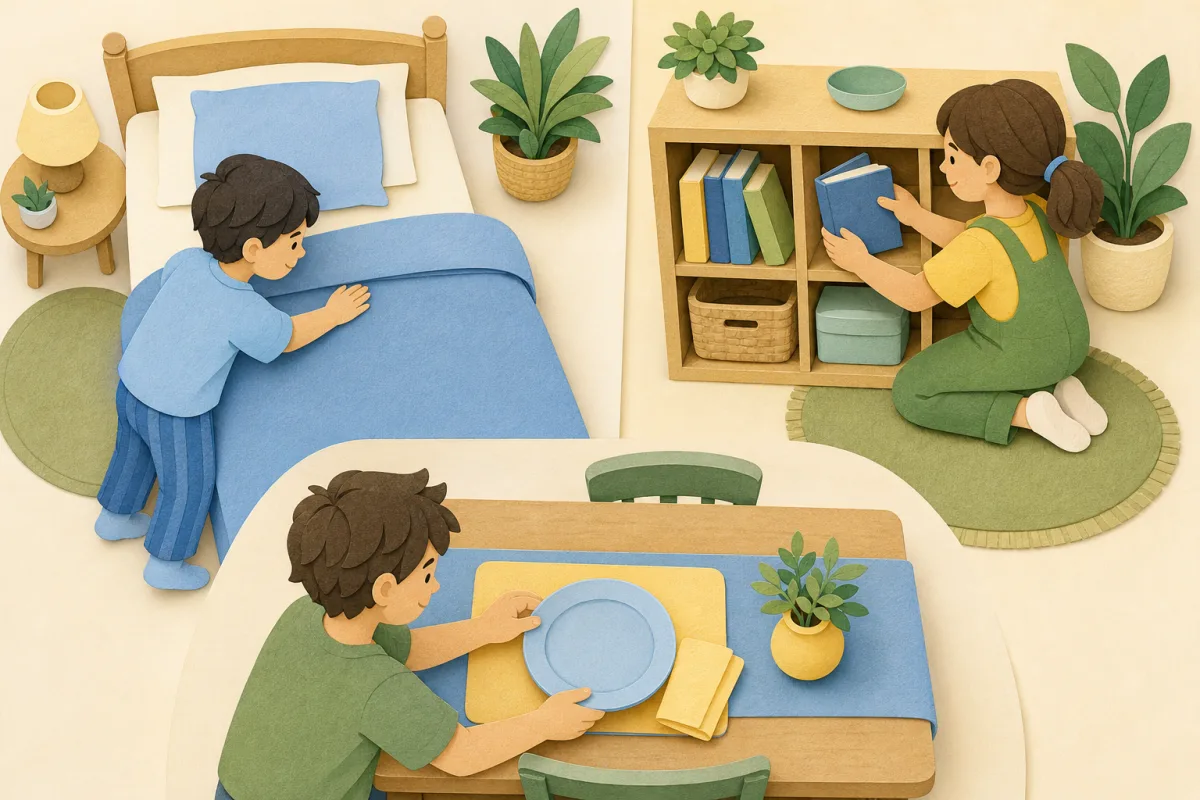
Daily, weekly, and occasional works better than one long list
Daily chores are brief reset tasks: making the bed, clearing a meal place, putting belongings away, or feeding a pet under the family routine. Weekly chores take more time, such as vacuuming a room, putting away laundry, or tidying a shelf. Occasional chores are shared projects, such as organizing a closet, helping in the yard, or preparing for visitors.
A manageable starter plan might be one personal task, one shared-space task, and one weekly job. Once the routine feels reliable, add another responsibility instead of making every day longer.
Teach a new chore without taking it back
- Choose a specific finish line. “Put the books on this shelf” is clearer than “clean your room.”
- Show the job once. Narrate the steps and point out safety rules.
- Do it together. Let the child complete the parts they can do.
- Step back gradually. Offer a reminder or picture cue before doing the task for them.
- Check the agreed result. Praise effort specifically, then calmly show what still needs attention.
If a chore repeatedly falls apart, make the task smaller, move it to a less rushed time, reduce the number of steps, or change the storage system. Independence grows from a task that is achievable, not from a perfect result on the first try.

Allowance and paid chores
Many families treat basic personal care and shared household work as unpaid contributions: everyone who lives in the home helps care for it. Optional paid jobs can be extra work beyond regular responsibilities, especially jobs that are occasional, take longer, or solve a particular family need.
- Usually unpaid family contributions: clearing a place, putting away personal belongings, feeding a pet as part of the routine, and helping reset a shared room.
- Possible optional paid extras: sorting a donation area with an adult, helping with a special yard project, organizing a family supply shelf, or doing an agreed extra task beyond the normal routine.
What matters most is clarity. Decide before the task whether it is a family contribution or an extra job, what “finished” means, and when payment or another reward is earned.
Keep the routine visible
A paper list on the fridge, a whiteboard, or a simple checklist can make expectations easier to see. If your family prefers a digital routine, Daylik’s family chore and reward tools can be explored alongside your own household rules. For setup or account questions, visit Daylik support. You can also review the privacy policy before deciding whether it suits your family.
What if my child is ready for more responsibility?
Increase one part of the job at a time. A child who can clear a meal place might next sort dishwasher-safe items, then help load them with a check-in. A child who can tidy a bedroom might next plan the order of tasks or help reset one shared area. Keep new safety boundaries explicit.
Can this checklist work for a child who needs accommodations?
Yes, when the task is adapted to the child rather than the child being forced to fit the task. Try a shorter sequence, a visual checklist, a lightweight tool, a seated version of the job, a quieter time of day, or shared responsibility. The goal is meaningful participation and growing confidence.